Irish Walled Towns Network: Feedback

Irish Walled Towns Network: Feedback

Oidhreacht Tógtha / Uirbeach & Seandálaíocht

Summary of feedback:

• 18 Walled Towns/Cities organised events on Irish Walled Towns’ Day 2006. Events included family fun-days, concerts, guided walks, etc.;
• Heritage Officers, Heritage Groups, local communities and businesses, Government Ministers, Local Authority Councillors and Officers
were all involved in the organisation and launching of the all-island events;
• The Network’s events were given excellent media coverage from national and local press, local radio, etc; (see Appendix E);
• The Heritage Council distributed over 300 Council T-shirts and baseball hats throughout Ireland on Irish Walled Towns’ Day;
• Two Walled Towns Conferences were organised in Kilmallock and Dublin;
• Photographic competitions were launched in 10 Walled Towns (north and south);
• The event has grown significantly since the first ever all-island event of 2005;
• Approximately 4,000 people took part in the IWTN’s celebratory Irish Walled Towns’ Day in 2006;
• Irish Walled Towns’ Day is particularly important to historic walled towns located outside the Greater Dublin Area (GDA);
• The local photographic competition period for entries will close on the 29thSeptember 2006 and the national winners will be announced at the inaugural Irish Walled Towns Network Gala Dinner on the 9thNovember 2006 in the D Hotel, Drogheda

  • Foilsithe ag: The Heritage Council
The Future of Maritime and Inland Waterways Collections: Seminar Proceedings

The Future of Maritime and Inland Waterways Collections: Seminar Proceedings

Oidhreacht faoi uisce & mhuirí

Proceedings of a Seminar held at the Radisson Hotel in Athlone, Co. Westmeath on Friday 13th October 2006.

Further to its Audit of Maritime Collections and in support of its Museums Standards Programme for Ireland, the Heritage Council hosted a one-day seminar on the Future of Maritime and Inland
Waterways Collections in Ireland.

A selection of conservators, collectors, museum curators, and practitioners discussed the following themes:
• Maritime and Inland Waterway Collections are an intrinsic part of the Ireland’s heritage
• How can such collections be safeguarded in all their variety and number?
• How can decisions be made on what to retain?
• How can we move ahead to ensure a range of collections reflecting this important aspect of
our heritage?

  • Foilsithe ag: The Heritage Council
Ireland's Sharks and Rays

Ireland's Sharks and Rays

Oidhreacht Nádúrtha & Bithagsúlacht Oidhreacht faoi uisce & mhuirí

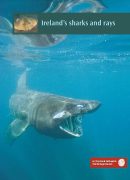
Sharks are some of the most threatened living creatures the ocean. Despite their fierce reputation, more people are killed each year worldwide by defective toasters than by shark attacks. Over 67 species of sharks, skates and rays live in Irish waters. Find out more with the Heritage Council poster, Ireland’s Sharks & Rays.

Sharks and rays have been swimming the world’s oceans for over four hundred million years. That’s one hundred million years before the first dinosaurs appeared
on land!

A wide variety of sharks and rays inhabit Irish waters, including 39 species of sharks and 28 species of skates and rays. Members of this diverse group can be found in all our seas, ranging from shallow estuaries down to depths of 2000m or more in the Atlantic.

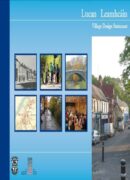
Lucan Village Design Statement

Lucan Village Design Statement

Oidhreacht Tógtha / Uirbeach & Seandálaíocht

A Village Design Statement (VDS) is a community based document that describes the qualities and characteristics of a settlement. It sets out design guidance for future development and can influence planning applications and decisions.

The VDS was produced through an extensive community consultation programme combined with desk-based study. This included an introductory meeting with community members, distribution of a key issues leaflet and questionnaires, and a series of workshops involving a wide cross section of the community including adults, children, and young people. Over 60 questionnaires were completed and over 75 people attended the main workshop.

  • Foilsithe ag: The Heritage Council
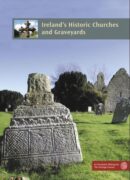
Ireland's Historic Churches and Graveyards

Ireland's Historic Churches and Graveyards

Oidhreacht Tógtha / Uirbeach & Seandálaíocht

Information and guidance on the conservation and management of historic graveyards and churches.

Historic graveyards are very different in their character from modern cemeteries that are often described as ‘Lawn Cemeteries’. The latter are usually laid out in neat rectangular burial plots that are accessed by a network of pathways. In these modern cemeteries the surface of the ground is level and has the appearance of a lawn because the cemetery has not been used as a burial place over many centuries. The opposite is true for historic graveyards some of which have been used as burial grounds for over a millennium.

  • Foilsithe ag: The Heritage Council
Repositioning Irish Archaeology in the Knowledge Society

Repositioning Irish Archaeology in the Knowledge Society

Oidhreacht Tógtha / Uirbeach & Seandálaíocht

This publication attempts to set out a new framework for Irish archaeology to work within as a result of increasing development-led activity since the early 1990s.

In terms of its constituent sectors, archaeology could now be regarded predominantly as a business domain which operates in a competitive economic climate and focuses on generating information. This situation is radically different from the previous dominance of employment in the
State and education sectors with the clear focus on research which characterised earlier decades.

In response to these markedly changed circumstances and the consequential impact of new problems and challenges, a Foresight Study, leading to the production of this report, was initiated in 2004 by the UCD School of Archaeology, University College Dublin.

  • Foilsithe ag: University College Dublin
Jellyfish in our Coastal Seas

Jellyfish in our Coastal Seas

Oidhreacht Nádúrtha & Bithagsúlacht Oidhreacht faoi uisce & mhuirí

This publication examines the different types of jellyfish which can be found in Irish waters. The life-cycle of the jellyfish, their habitats, jellyfish as food for other marine animals, and their impacts on humans is also outlined.

Ireland has five indigenous jellyfish species: Barrel, Blue, Common (Moon), Compass, and Lion’s Mane. A sixth species (Pelagia noctiluca) also occurs, but as it is an oceanic species it only occasionally makes an appearance in our coastal waters. Contrary to what you may think, jellyfish are not carried at the whim of ocean currents and tides on to our beaches. Many jellyfish maintain their positions by swimming down when the tide is going out, and swimming up when the tide is coming in. In this way they can stay in their preferred habitats.

  • Foilsithe ag: The Heritage Council
Ireland's Maritime Archaeology

Ireland's Maritime Archaeology

Oidhreacht faoi uisce & mhuirí

This publication provides an overview of maritime archaeology from the Mesolithic period to the archaeology of the modern coastline.

Ireland’s island story is written on its seashore. About ten thousand years ago, our first human
settlers – hunter-gatherers of the Mesolithic era - came here by boat. Since then, people have
lived, worked, travelled and buried their dead around Ireland’s coastal landscapes - using the
sea as a source of food, raw materials, as a means of travel and communications and as a place
to build communities.

  • Foilsithe ag: The Heritage Council
Heritage Council Annual Report 2006

Heritage Council Annual Report 2006

Tuarascáil Bhliantúil

Report on the activities of the Heritage Council including financial statements for 2006.

Report on the activities of the Heritage Council including financial statements for 2006.

  • Foilsithe ag: The Heritage Council
Landscape Character Assesment Final Report

Landscape Character Assesment Final Report

na tírdhreacha

The study involved review and evaluation of the LCAs in the context of the original objectives of the LCA programme, as set out in the (then) Department of the Environment and Local Government consultation draft Landscape and Landscape Assessment Guidelines. The evaluation also considered how the LCA programme in Ireland measures up to good practice in LCA elsewhere in Europe. Telephone consultations, with those involved in the preparation and use of the LCAs and with a range of national bodies, explored the ways in which LCA has been applied, and the influence that it has had on decision-making in relation to development and management of the landscape in Ireland. Case studies of LCA elsewhere in Europe were also undertaken to identify any useful lessons and pitfalls.

  • Foilsithe ag: The Heritage Council
  • An t-údar/ na húdair: Julie Martin Associates in association with Alison Farmer Associates