A Guide to Habitats in Ireland

A Guide to Habitats in Ireland

Oidhreacht Nádúrtha & Bithagsúlacht

To date the absence of a common standard has meant that agencies and individuals have been unable to provide data that was consistent or complementary. Such consistency in the work of habitat classification is recognised as following best practice.

The standard can also make a particularly important contribution in informing the development of programmes arising from major policy initiatives such as the National Development Plan, heritage plans and in the preparation of environmental impact statements for use in the planning proposals.

  • Foilsithe ag: The Heritage Council
  • An t-údar/ na húdair: This guide provides a standard scheme for describing habitats in Ireland.
Ireland's Coastline Seaweed

Ireland's Coastline Seaweed

Oidhreacht Nádúrtha & Bithagsúlacht Oidhreacht faoi uisce & mhuirí

Information brochure about Ireland's coastal seaweed, including the different types and current and historical uses.

Seaweed is one of Ireland’s least-used resources. As an island with a 7,000 kilometre coastline, located in the warm and fertile waters of the Gulf Stream, we have an abundance of many
different kinds of seaweed. Although we currently use only a small fraction of Irish seaweed, this situation is changing. 

Attention is turning to the sea as a source of food, energy, and raw material for the chemical and pharmaceutical industries. Ireland’s interesting history of harvesting seaweed is about to
begin a new chapter.

  • Foilsithe ag: The Heritage Council
Bat Survey Guidelines 2008

Bat Survey Guidelines 2008

Oidhreacht Tógtha / Uirbeach & Seandálaíocht Oidhreacht Nádúrtha & Bithagsúlacht

These guidelines have been developed for Ecological Consultants to standardise both the methodology for survey of structures within the Heritage Council’s Traditional Farm Buildings Scheme and the reporting of same. In developing these guidelines, we have drawn on a wide range of expertise and believe that the advice given is the best that is currently available. Bat surveys submitted to the building owner and the Heritage Council must adhere to these guidelines in order to satisfy grant requirements under the Traditional Farm Buildings Scheme.

  • Foilsithe ag: The Heritage Council
  • An t-údar/ na húdair: Tina Aughney, Conor Kelleher & Donna Mullen
Towpaths for the Future: Seminar Proceedings

Towpaths for the Future: Seminar Proceedings

Turasóireacht Oidhreachta & caitheamh aimsire Oidhreacht Nádúrtha & Bithagsúlacht

The Heritage Council hosted a seminar on the use of towpaths on 20th June 2007. The purpose of

this seminar was to stimulate debate and ideas about the potential of Ireland’s towpaths, including maintenance paths on river navigations, and to examine their economic, recreational, tourism, and heritage potential. The proceedings of the seminar are provided in this publication.

The speakers examined the uses made of towpaths in the UK and in Ireland. Topics included the example of the regeneration of the Thames Navigation, the economic value of towpath activities, walking for health, access for all, anti-social behaviour, and current and future activities on towpaths in Ireland. It is hoped that, by presenting a range of experiences from these islands, new ideas may be stimulated for existing and future navigations in Ireland.

  • Foilsithe ag: The Heritage Council
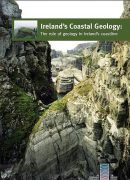
Ireland's Coastal Geology

Ireland's Coastal Geology

Oidhreacht Nádúrtha & Bithagsúlacht Oidhreacht faoi uisce & mhuirí

Information leaflet on the geology of Ireland.

Whilst the coast offers excellent opportunities to see all types of geology in cliff exposures, it also shows thegeomorphology – the development of different coastal landforms. The range of landforms produced is enormous, and they are all dynamic – the changes which occur within people’s lifetimes are extremely rapid compared to some geological changes.

  • Foilsithe ag: The Heritage Council
Farmland Habitats

Farmland Habitats

Oidhreacht Nádúrtha & Bithagsúlacht

This booklet highlights the positive relationship between agriculture and heritage.

Many of the 100,000 or so farmers that work the land in Ireland provide positive management of our natural heritage, and are vital for the maintenance of our diverse landscape. This booklet highlights the many positive relationships between agriculture and heritage, and will make a valuable contribution to how we view the role of farmers as custodians of the Irish countryside.

  • Foilsithe ag: The Heritage Council
Waterways Evaluation

Waterways Evaluation

Oidhreacht Nádúrtha & Bithagsúlacht

In 2007, the Heritage Council commissioned an evaluation of the five waterways corridor studies it has carried out to date. The studies cover the entire length of the Shannon Navigation and sections of the Grand and Royal Canals. The studies document in detail the special heritage and socio-economic aspects of the waterway corridor, and propose policies and actions through which sustainable development can be achieved.

  • Foilsithe ag: The Heritage Council
  • An t-údar/ na húdair: David Hickie, Charles Stanley-Smith and Mide Gerrard
Waterways Corridor Study: Appendix 3 - Industrial Heritage

Waterways Corridor Study: Appendix 3 - Industrial Heritage

Oidhreacht Tógtha / Uirbeach & Seandálaíocht Oidhreacht Nádúrtha & Bithagsúlacht

The following report comprises the results of a desk-based industrial survey of the area
surrounding the River Shannon and a field survey of the corridor through which it flows.

The objective of the industrial heritage component of the study is to identify and assess the distinctive aspects of the industrial heritage and to provide an inventory of the extant sites within the Waterway Corridor.

  • Foilsithe ag: The Heritage Council
  • An t-údar/ na húdair: Cultural Resource Development Services​
Literature Review on the Impacts of Boatwash on the Heritage of Ireland’s Inland Waterways

Literature Review on the Impacts of Boatwash on the Heritage of Ireland’s Inland Waterways

Oidhreacht Nádúrtha & Bithagsúlacht Músaeim, cartlanna & Oidhreacht cultúrth

The impact of boat-wash on the natural and cultural heritage of Ireland’s waterways was identified as an important issue in the Waterways Corridor Studies carried betweeen 2001 and 2006. To further investigate this, in 2006 the Heritage Council commissioned Hydraulics & Maritime Research Centre UCC to undertake a Literature Review on research carried out to date and current practice in relation to boat-wash.

The specific impacts examined were:

  • Ecological impact - terrestrial and aquatic flora and fauna, and terrestrial and aquatic habitats;
  • Cultural heritage impact - underwater archaeology, and upstanding archaeological structures such as crannógs, landing places, harbours, piers and bridges from medieval times to the mid-20th century;
  • Hydro-morphological impact - river and canal channels, river and canal banks, different soil types to assess their susceptibility to erosion, sediment mobilisation and depositional patterns, navigational and engineering structures.

This review provides an overview of the findings, methodologies and mitigation strategies used elsewhere. It will inform a second stage of research involving field study at a later stage.

  • Foilsithe ag: The Heritage Council
  • An t-údar/ na húdair: J. Murphy, G. Morgan and O. Power
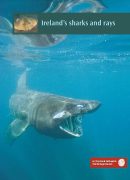
Ireland's Sharks and Rays

Ireland's Sharks and Rays

Oidhreacht Nádúrtha & Bithagsúlacht Oidhreacht faoi uisce & mhuirí

Sharks are some of the most threatened living creatures the ocean. Despite their fierce reputation, more people are killed each year worldwide by defective toasters than by shark attacks. Over 67 species of sharks, skates and rays live in Irish waters. Find out more with the Heritage Council poster, Ireland’s Sharks & Rays.

Sharks and rays have been swimming the world’s oceans for over four hundred million years. That’s one hundred million years before the first dinosaurs appeared
on land!

A wide variety of sharks and rays inhabit Irish waters, including 39 species of sharks and 28 species of skates and rays. Members of this diverse group can be found in all our seas, ranging from shallow estuaries down to depths of 2000m or more in the Atlantic.