Enhancing Local Distinctiveness: Evaluation of Village Design Statements (VDSs) in Ireland 2000-2008

Enhancing Local Distinctiveness: Evaluation of Village Design Statements (VDSs) in Ireland 2000-2008

Oidhreacht Tógtha / Uirbeach & Seandálaíocht

The remit for this study was to inform national policy on issues relating to the conservation, enhancement and sustainable development of villages in Ireland.

The remit for this study was to inform national policy on issues relating to the conservation, enhancement and sustainable development of villages in Ireland. The stated aim was: “to examine the ways in which Village Design Statements have progressed and developed in Ireland, with particular emphasis on the involvement of the Heritage Council, Local Authorities / Local Authority Heritage Officers in VDS and the adoption of VDS as Supplementary Planning Guidance”.

  • Foilsithe ag: The Heritage Council
  • An t-údar/ na húdair: Stephen Owen, Jeff Bishop, Malcolm Moseley, Ros Boase, Fintan Coffey
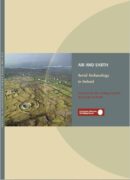
Air Earth Aerial Archaeology 2008

Air Earth Aerial Archaeology 2008

Oidhreacht Tógtha / Uirbeach & Seandálaíocht

One of the initiatives identified by the Heritage Council’s Strategic Plan 2007-2013 is that archaeological research issues and practice in the widest sense should be more overtly and consistently identified and from time to time reviewed. These research issues should also engage more with what both specialists and local communities find interesting about the past. To contribute to this the Heritage Council commissioned Mr George Lambrick to examine aerial archaeology in Ireland. Aerial Archaeology is the practice of using aircraft (or in some cases satellites) to provide a high-level view of the landscape based on conventional photography and a range of remote sensing technologies. That review is presented here.

  • Foilsithe ag: The Heritage Council
  • An t-údar/ na húdair: George Lambrick
Review of Research Needs in Irish Archaeology

Review of Research Needs in Irish Archaeology

Oidhreacht Tógtha / Uirbeach & Seandálaíocht

This approach is under-pinned by the wider need to place archaeological research into the context of public access, life-long learning, social inclusion and cultural diversity. The recommendations in this report attempt to address the crisis in which Irish archaeology was experiencing at this time.

  • Foilsithe ag: The Heritage Council
Bolton Library Conservation Plan 2007

Bolton Library Conservation Plan 2007

Oidhreacht Tógtha / Uirbeach & Seandálaíocht Músaeim, cartlanna & Oidhreacht cultúrth

This plan was commissioned by the Heritage Council, in partnership with the Bolton Library, to develop and propose policies for the long-term care and management of the Library and to increase understanding of its historic importance in the town of Cashel and the wider national and international context.

The Bolton Library, Cashel, is one of Ireland’s great, but little known  treasures. The bequest of Archbishop Bolton, it provides a rich insight into the cultured milieu in which such a patron lived and the wide breadth of his learning and aspirations. 

It complements other such collections in Ireland, from the same period, such as the Worth Library and Marsh’s Library, both in Dublin. The donation of the Bolton Library to subsequent generations provided a legacy beyond price.

  • Foilsithe ag: Heritage Council
  • An t-údar/ na húdair: Mr Alastair Coey, Dr Brian Turner and Ms Niamh McGuinn
Lemanaghan, County Offaly: Conservation Plan

Lemanaghan, County Offaly: Conservation Plan

Oidhreacht Tógtha / Uirbeach & Seandálaíocht

The Conservation Plan for Lemanaghan, County Offaly, provides a framework for  the  conservation  of  the  historic  place.  The authors have gathered  and  summarised a body of knowledge leading to an understanding of the significance of the complex. The plan sets out principles and formulates appropriate policies to protect that significance.

The Plan has established that Lemanaghan is:
• A sacred place of great antiquity
• A place containing buildings of architectural significance
• A place rich in documentary history and archaeological potential
• A place where there is a long tradition of devotional practice
• A place 'apart', possessing a strong sense of being untouched by the modern world

  • Foilsithe ag: The Heritage Council
  • An t-údar/ na húdair: Margaret Quinlan and Rachel Moss
Newtown Jerpoint, County Kilkenny: Conservation Plan

Newtown Jerpoint, County Kilkenny: Conservation Plan

Oidhreacht Tógtha / Uirbeach & Seandálaíocht

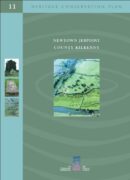
On behalf of the owner of Newtown Jerpoint  and Kilkenny County Council, in partnership with the Department of the Environment, Heritage and Local Government and the Office of Public Works, the Heritage Council commissioned Oxford Archaeology to produce a Conservation Plan for the site of Newtown Jerpoint, County Kilkenny.

Newtown is a deserted medieval town, dating back to c. AD 1200, when it was founded near a crossing point on the River Nore not far from Thomastown and the Cistercian Abbey of Jerpoint. The site contains the standing remains of St Nicholas’ Church and a domestic tower, both of which are partly overgrown and tending towards dilapidation. The site also contains the well-preserved outlines of burgage plots, some of which contain the remains of house platforms which have survived despite clearing works on the site in the 19th century

  • Foilsithe ag: The Heritage Council
  • An t-údar/ na húdair: Oxford Archaeology
Irish walled Towns Network: Feedback

Irish walled Towns Network: Feedback

Oidhreacht Tógtha / Uirbeach & Seandálaíocht

Feedback from 20 participating towns/ cities in Irish Walled Towns’ Day and a comparison with events in 2006.

The Heritage Council of Ireland established the Irish Walled Towns Network (IWTN) in April 2005
‘to unite and co-ordinate the strategic efforts of local authorities involved in the management, conservation and enhancement of historic walled towns in Ireland, both North and South’
The Irish Walled Towns Network is formally linked to the International Walled Towns Friendship Circle (IWTFC) which is the international association for the sustainable development of walled towns, walled cities and fortified historic towns.

  • Foilsithe ag: The Heritage Council
Waterways Corridor Study: Appendix 3 - Industrial Heritage

Waterways Corridor Study: Appendix 3 - Industrial Heritage

Oidhreacht Tógtha / Uirbeach & Seandálaíocht Oidhreacht Nádúrtha & Bithagsúlacht

The following report comprises the results of a desk-based industrial survey of the area
surrounding the River Shannon and a field survey of the corridor through which it flows.

The objective of the industrial heritage component of the study is to identify and assess the distinctive aspects of the industrial heritage and to provide an inventory of the extant sites within the Waterway Corridor.

  • Foilsithe ag: The Heritage Council
  • An t-údar/ na húdair: Cultural Resource Development Services​
Irish Walled Towns Network: Feedback

Irish Walled Towns Network: Feedback

Oidhreacht Tógtha / Uirbeach & Seandálaíocht

Summary of feedback:

• 18 Walled Towns/Cities organised events on Irish Walled Towns’ Day 2006. Events included family fun-days, concerts, guided walks, etc.;
• Heritage Officers, Heritage Groups, local communities and businesses, Government Ministers, Local Authority Councillors and Officers
were all involved in the organisation and launching of the all-island events;
• The Network’s events were given excellent media coverage from national and local press, local radio, etc; (see Appendix E);
• The Heritage Council distributed over 300 Council T-shirts and baseball hats throughout Ireland on Irish Walled Towns’ Day;
• Two Walled Towns Conferences were organised in Kilmallock and Dublin;
• Photographic competitions were launched in 10 Walled Towns (north and south);
• The event has grown significantly since the first ever all-island event of 2005;
• Approximately 4,000 people took part in the IWTN’s celebratory Irish Walled Towns’ Day in 2006;
• Irish Walled Towns’ Day is particularly important to historic walled towns located outside the Greater Dublin Area (GDA);
• The local photographic competition period for entries will close on the 29thSeptember 2006 and the national winners will be announced at the inaugural Irish Walled Towns Network Gala Dinner on the 9thNovember 2006 in the D Hotel, Drogheda

  • Foilsithe ag: The Heritage Council
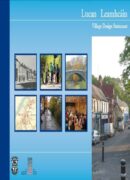
Lucan Village Design Statement

Lucan Village Design Statement

Oidhreacht Tógtha / Uirbeach & Seandálaíocht

A Village Design Statement (VDS) is a community based document that describes the qualities and characteristics of a settlement. It sets out design guidance for future development and can influence planning applications and decisions.

The VDS was produced through an extensive community consultation programme combined with desk-based study. This included an introductory meeting with community members, distribution of a key issues leaflet and questionnaires, and a series of workshops involving a wide cross section of the community including adults, children, and young people. Over 60 questionnaires were completed and over 75 people attended the main workshop.

  • Foilsithe ag: The Heritage Council