Virtual Visits to selected monuments and places- Clonamery Church, Co Kilkenny
Take a virtual visit to Clonamery Church, Co Kilkenny with Heritage Council Architecture Officer Colm Murray
Ireland’s government takes care of over 720 archaeological sites which are called National Monuments. These are normally open to the public because they tell the story of who used to live here. The buildings our ancestors left behind are evidence of what they thought and felt and how they lived.
Many of these places are off the beaten track and getting to them takes you into the heart of the Irish countryside down small lanes, with briars, hawthorn, gorse and all the other wild plants with their smells and colours around you. Some of these places have breath-taking views when you get there. You don’t need to be a historian to find visiting these places a delight for the senses in the present moment. Knowing that they are hundreds of years old, that they are plumb-lines through time, adds something more to getting there. If you live nearby, maybe you can visit some of these places as the summer unfolds. At the moment, in line with government advice we should all be staying at home and not visiting these places. So, the idea of this series is to help you visit these sites virtually.
Clonamery Church, Co. Kilkenny
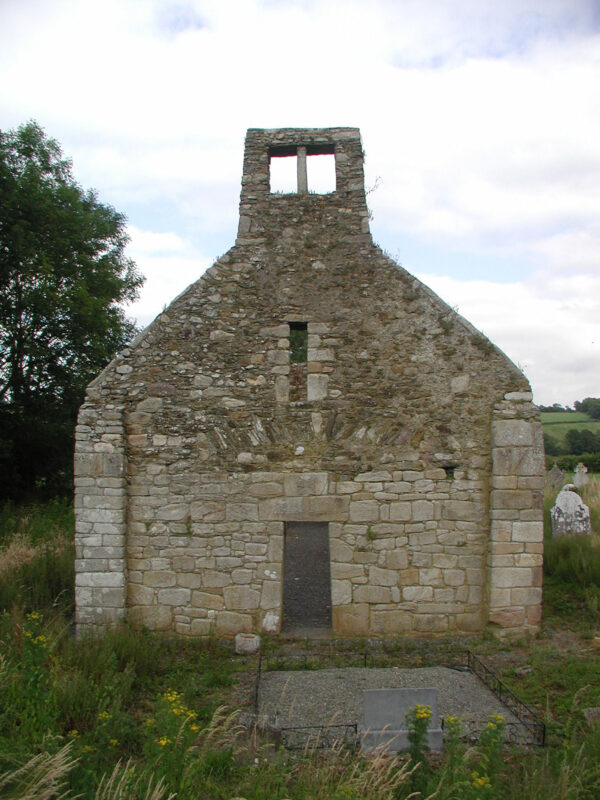
This site is perched above the steep-sided gorge where the River Nore makes its way to the sea in South Kilkenny. It’s down a small farmer’s lane now. The church is all that remains of a monastery dedicated to St Brendan. When it was built, the river would have been the main way of getting around, not the roads we have now. At that time there were no fields. Can you imagine what it would be like to move around the countryside without roads?
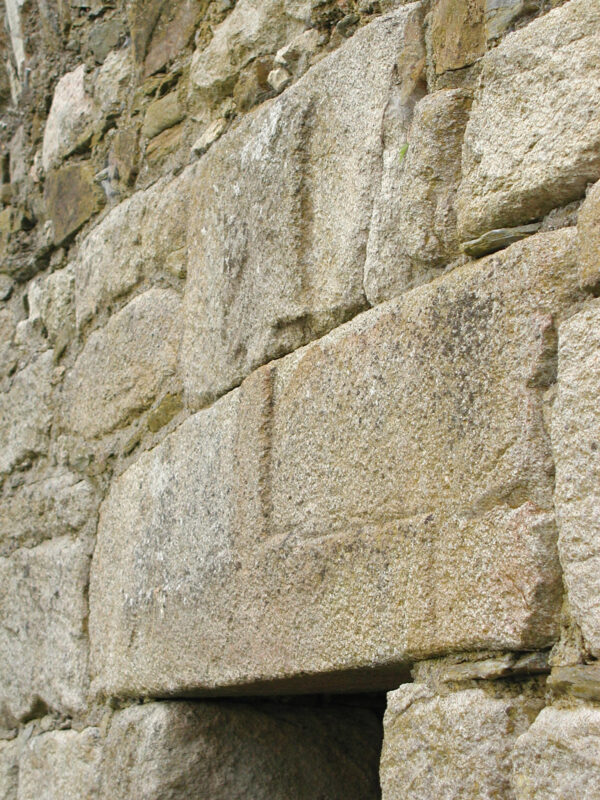
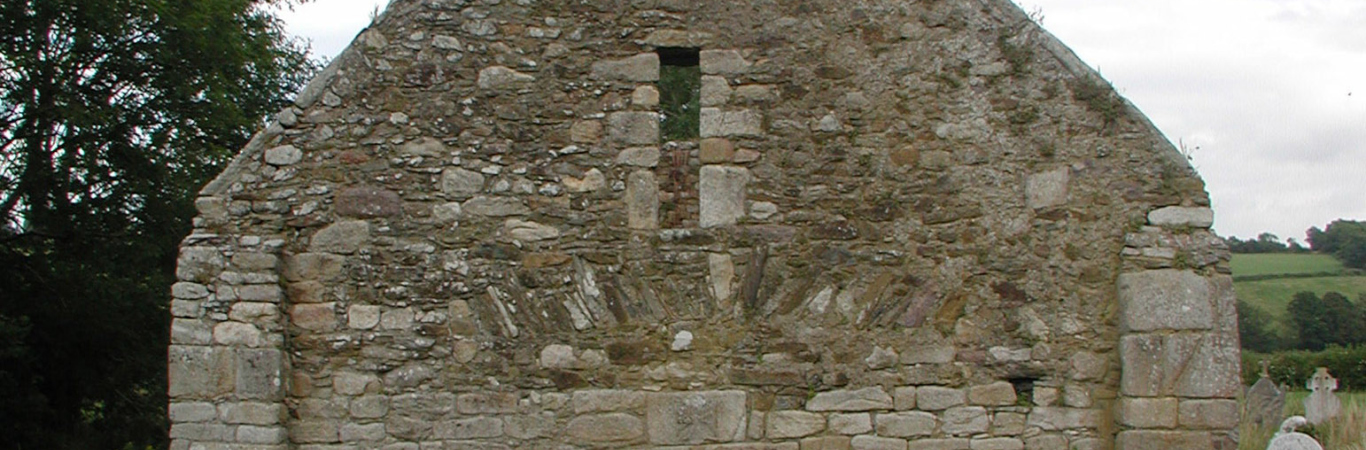
The church is important because the doorway and the two antae or pillars on the gable are from the pre-Romanesque period probably around 1000 AD. The large masonry blocks of browny-yellow granite are called cyclopean masonry due to their large size. The smaller masonry above this is of a later date. The sides of the door are slanted, this is called a trabeate doorway. How did they get a door to open if it fitted into this shape? For hinges to work, they should be exactly one above the other. Are there any doors in your house that don’t work because of the hinges? The top of the door is made from a single stone - the lintel. This one is carved with a cross, which makes it special. Where historians found buildings with carved stones like this one, they got interested because it is features like this which fit into the story of how old buildings are. People’s idea of what is stylish in a building changed over time. This is how they think they know that it is an old building.
The stone of this building is granite, like the hills around, but unlike the limestone to be found through a lot of the rest of Co. Kilkenny. You can see how the granite is rounded and browny-yellow coloured? Limestone is more blocky and grey. Did you know that hurling and camogie thrive in counties with a lot of limestone? This is not an accident – the ash trees to make hurls thrive on limestone soils.
Is there anything else about this building or this place that catches your eye? See if you can write down the things I forgot to mention that make it special.