Ireland's Coastal Heritage

Ireland's Coastal Heritage

Natural Heritage & Biodiversity Underwater & Maritime Heritage

This publication highlights the threats to Ireland’s coastline, providing many little-known facts about our coastal heritage.

The island of Ireland has a long and complex coastline in relation to its land area. This interface between land and sea contains some of the finest parts of our natural and man-made heritage. The natural heritage includes rocks, marine and coastal habitats and marine life, including plankton, shellfish, fish, seabirds, whales and seals. Our human heritage is rich and varied including coastal and island communities, traditional boats, historical fishing methods, shipwrecks, and coastal archaeology.

  • Published by: The Heritage Council
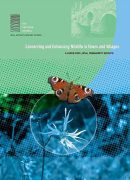
Conserving and Enhancing Wildlife in Towns and Villages: A Guide for Local Community Groups

Conserving and Enhancing Wildlife in Towns and Villages: A Guide for Local Community Groups

Natural Heritage & Biodiversity

Towns and villages can support a
surprisingly wide range of wildlife habitats and species of local, or
even national conservation interest. This guide provides advice to those
who want to take action to conserve, protect and enhance wildlife in
their town or village.

The importance of ecologically friendly management of areas in or around towns or villages is recognised in a number of competitions, awards and grants, including the Heritage Council Wildlife and Local Heritage Grants and the Tidy Towns Competition, organised by the
Department of the Environment, Heritage and Local Government .If your community group is interested in applying for or participating in either these or similar grants or competitions, this guide will be of relevance to you.

  • Published by: The Heritage Council
‘Pilot’ Rural Renewal Scheme for the Upper Shannon Area: Submission to the Department of Finance – Final Report

‘Pilot’ Rural Renewal Scheme for the Upper Shannon Area: Submission to the Department of Finance – Final Report

Natural Heritage & Biodiversity

This report provides a detailed assessment of the impact that the ‘Pilot’ Rural Renewal Tax Scheme for the Upper Shannon Area has had on lands adjacent to the River Shannon and hence the heritage of the River Shannon Waterway Corridor; a ‘waterway corridor area’ of international significance.

The assessment focuses on the resulting impact of increased development pressures on the heritage within the River Shannon Corridor and the implications for the planning and development system within this area. Four detailed case studies are provided (two case studies each for Counties Leitrim and Roscommon), in order to illustrate the long-term impact that the tax incentive scheme will have on the River Shannon Corridor Area.

  • Published by: The Heritage Council
Integrating Policies for Ireland's Inland Waterways

Integrating Policies for Ireland's Inland Waterways

Natural Heritage & Biodiversity

This policy paper has been written in the light of heritage policy developments (the
National Heritage Plan and the National Biodiversity Plan) and the establishment of Waterways Ireland.

Notwithstanding these welcome developments, Ireland’s inland waterways and their corridors

still urgently need a strategic approach. Waterways Ireland’s remit covers most of Ireland’s
waterways although some, in particular several disused navigations, are not clearly the
responsibility of any agency. This document proposes a possible direction for a concerted and
co-ordinated effort to ensure that the heritage, social, and economic value of all of Ireland’s
waterways is enhanced.

  • Published by: The Heritage Council
Seeking Your Views on Water Quality: Feedback Report

Seeking Your Views on Water Quality: Feedback Report

Natural Heritage & Biodiversity

This document is a record of the feedback to the consultation document and the seminar of 18th October 2003 and represents the views of the respondents expressed in writing or during the workshop and plenary sessions.

The Heritage Council identified the implementation of the EU Water Framework Directive as a major work area with particular emphasis on the public participation aspects. To assist in developing policy, Council agreed to canvas opinion on current water quality and current and future water management proposals.

  • Published by: The Heritage Council
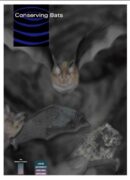
Conserving Bats

Conserving Bats

Natural Heritage & Biodiversity

A guide for Local Authorities and others on the conservation of bats.

This guide provides information on the nine species of bats found in Ireland, where they can be found and measures that can be taken during construction works to protect them.

  • Published by: The Heritage Council
Development of a Car Survey Monitoring Protocall for Ireland

Development of a Car Survey Monitoring Protocall for Ireland

Natural Heritage & Biodiversity

The Heritage Council asked the Bat Conservation Trust to develop and evaluate a novel bat detector-based monitoring project for Ireland.

Fifteen volunteers surveyed eight survey routes, five of which were repeated. Volunteers contributed 85 hours on the survey. The mean number of encounter rates (per km) for each species/species group were: common pipistrelle (Pipistrellus pipistrellus) = 1.94, soprano pipistrelle (P. pygmaeus) = 0.75, Leisler’s bat (Nyctalus leisleri) = 0.46 and Myotis sp = 0.06.

  • Published by: The Heritage Council
  • Author(s): Dr Colin Catto, Dr Jon Russ, Steve Langton
Review of the CAP Rural Development Plan 2000-2006

Review of the CAP Rural Development Plan 2000-2006

Natural Heritage & Biodiversity

This report, prepared by the European Forum on Nature Conservation and Pastoralism was written at a time of great change in the agricultural sector. A mid-term review of the CAP was underway and Ireland's REPS was also being fully reviewed.

The report examined in particular the impact of agriculture on aspects of our natural heritage. It expresses the positive view that certain types of agricultural activity should be more valued because of their tremendous contribution to maintaining diversity within the nation's natural heritage. 

The report goes on to point out that in many instances it is these very activities and the habitats they maintain which are threatened by competition from other land uses.

  • Published by: The Heritage Council
  • Author(s): D.Gwyn, L. Jones, Eric Bignal, Liam Lysaght, David Baldock and Jim Phelan
Irish Water (As Gaeilge)

Irish Water (As Gaeilge)

Natural Heritage & Biodiversity

This document outlines the threats to Irish water quality - in our rivers, lakes and seas. It suggests ways that we can better manage our water and outlines the aims of the Water Framework Directive.

The Water Framework Directive came into force on 22 December 2002 and covers water resources throughout the EU. It addresses all water, from groundwater to coastal areas of sea water, and gives us a framework for

dealing with both water quality and water quantity.

  • Published by: The Heritage Council
Irish Water

Irish Water

Natural Heritage & Biodiversity

This document outlines the threats to Irish water quality - in our rivers, lakes and seas. It suggests ways that we can better manage our water and outlines the aims of the Water Framework Directive.

The Water Framework Directive came into force on 22 December 2002 and covers water resources throughout the EU. It addresses all water, from groundwater to coastal areas of sea water, and gives us a framework for dealing with both water quality and water quantity.

  • Published by: The Heritage Council
document.querySelectorAll('a[href$=".pdf"]').forEach(link => { link.addEventListener('click', event => { let fileName = link.getAttribute('href'); fathom.trackEvent(`PDF Download: ${fileName}`); }); });