Search

Search Results: og

Archaeology & Forestry in Ireland

Archaeology & Forestry in Ireland

Built/Urban Heritage & Archaeology Natural Heritage & Biodiversity

Recognising the need for policies beneficial to the development of forestry in relation to environmental and man-made heritage, this publication is a review of the existing structures, and includes the author's recommendations towards aiding future policy drafting. 

With the increased interest in and awareness of environmental and heritage issues, it is hoped that this report will make a positive contribution to the progression of sustainable development strategies at all levels in Ireland.

  • Published by: The Heritage Council
  • Author(s): Gina Johnson
Repositioning Irish Archaeology in the Knowledge Society

Repositioning Irish Archaeology in the Knowledge Society

Built/Urban Heritage & Archaeology

This publication attempts to set out a new framework for Irish archaeology to work within as a result of increasing development-led activity since the early 1990s.

In terms of its constituent sectors, archaeology could now be regarded predominantly as a business domain which operates in a competitive economic climate and focuses on generating information. This situation is radically different from the previous dominance of employment in the
State and education sectors with the clear focus on research which characterised earlier decades.

In response to these markedly changed circumstances and the consequential impact of new problems and challenges, a Foresight Study, leading to the production of this report, was initiated in 2004 by the UCD School of Archaeology, University College Dublin.

  • Published by: University College Dublin
INSTAR Research Programme: 2 year Review

INSTAR Research Programme: 2 year Review

Built/Urban Heritage & Archaeology

Prepared by Professor Barry Cunliffe, Emeritus Professor of European Archaeology, University of Oxford.

The INSTAR Programme was set up in 2008 to help realise the potential of Ireland’s archaeological record and to transform understanding of how Irish society has evolved. After two years of operation, this review finds the programme to be a spectacular success and a model form other countries to follow. 

The programme is transforming the very nature of Irish archaeological endeavour by bringing together the academic, regulatory and private sectors to address highly relevant research topics including climate change and landscape and is creating new knowledge and understanding for the academic world and for the

general public alike.

  • Published by: The Heritage Council
  • Author(s): Professor Barry Cunliffe
Human Remains in Irish Archaeology

Human Remains in Irish Archaeology

Built/Urban Heritage & Archaeology

This publication sets out the main issues - scientific, legal and ethical - involved in the excavation and treatment of ancient human remains and arrives at some conclusions about best practice in this aspect of Irish archaeology.

Ancient human remains merit special consideration as archaeological objects for a number of reasons. Not least of all is their emotive power, offering startling and immediate contact with the dead and a powerful reminder of the inescapable fate of the living. To archaeological specialists they constitute a valuable historical and scientific resource, inscribed with evidence of the working life, living conditions, diet, traumas and diseases of past generations. To developers and planners ancient human remains bring added complexity to projects impacting upon the archaeological heritage.

  • Published by: The Heritage Council
  • Author(s): Jerry O'Sullivan and Jim Killgore
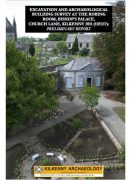
Excavations & Archaeological Buildings Survey at the Robing Room, Bishops Palace, Kilkenny (11E157)

Excavations & Archaeological Buildings Survey at the Robing Room, Bishops Palace, Kilkenny (11E157)

Built/Urban Heritage & Archaeology

Preliminary findings from an archaeological building recording and excavation project that was undertaken in April-May 2011 at the Robing Room, Church Lane, Kilkenny

Preliminary findings from an archaeological building recording and excavation project that was undertaken in April-May 2011 at the Robing Room, located within the grounds of the former episcopal Palace of the Diocese of Ossory, now the headquarters of the Heritage Council.

  • Published by: The Heritage Council
  • Author(s): Kilkenny Archaeology