Search

Search Results: og

Peatland Archaeology

Peatland Archaeology

Built/Urban Heritage & Archaeology

Peatlands are exceptional environments for the preservation of unique and fragile archaeological remains. This publication is in the Our Historic Landscapes series and describes the remarkable cultural and environmental heritage of our peatlands.

  • Published by: The Heritage Council
  • Author(s): Benjamin Gearey, Caitríona Moore, Ellen O’Carroll and Claire Nolan
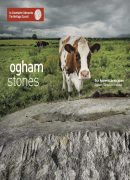
Ogham Stones

Ogham Stones

Built/Urban Heritage & Archaeology

This Ogham writing system or script was created for an early form of the Irish language. Our earliest ogham inscriptions on stone are approximately dated on linguistic grounds to between the 4th and the 7th century AD. Over 400 known examples of ogham stones and fragments of various shapes and sizes have survived, each with its own unique biography or story.

  • Published by: The Heritage Council
Farming and Archaeology

Farming and Archaeology

Built/Urban Heritage & Archaeology

This publication provides a guide for farmers on how to recognise and protect important archaeology that may be on their land. 

Archaeological monuments such as moated sites and ringforts are the former homesteads of previous farming communities. Farming has been a vital force in developing our heritage and modern non-intrusive farming practices continue to preserve and shape our historic landscapes. This valuable legacy is something we should try to understand, cherish and protect for ourselves and for future generations.

  • Published by: The Heritage Council
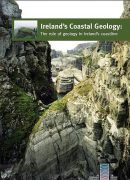
Ireland's Coastal Geology

Ireland's Coastal Geology

Natural Heritage & Biodiversity Underwater & Maritime Heritage

Information leaflet on the geology of Ireland.

Whilst the coast offers excellent opportunities to see all types of geology in cliff exposures, it also shows thegeomorphology – the development of different coastal landforms. The range of landforms produced is enormous, and they are all dynamic – the changes which occur within people’s lifetimes are extremely rapid compared to some geological changes.

  • Published by: The Heritage Council
Ireland's Maritime Archaeology

Ireland's Maritime Archaeology

Underwater & Maritime Heritage

This publication provides an overview of maritime archaeology from the Mesolithic period to the archaeology of the modern coastline.

Ireland’s island story is written on its seashore. About ten thousand years ago, our first human
settlers – hunter-gatherers of the Mesolithic era - came here by boat. Since then, people have
lived, worked, travelled and buried their dead around Ireland’s coastal landscapes - using the
sea as a source of food, raw materials, as a means of travel and communications and as a place
to build communities.

  • Published by: The Heritage Council
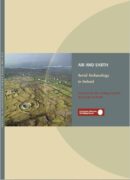
Air and Earth: Aerial Archaeology in Ireland

Air and Earth: Aerial Archaeology in Ireland

Built/Urban Heritage & Archaeology

The Heritage Council commissioned Mr George Lambrick to examine aerial archaeology in Ireland.

One of the initiatives identified by the Heritage Council’s Strategic Plan 2007-2013 is that archaeological research issues and practice in the widest sense should be more overtly and consistently identified and from time to time reviewed. These research issues should also engage more with what both specialists and local communities find interesting about the past. To contribute to this the Heritage Council commissioned Mr George Lambrick to examine aerial archaeology in Ireland. Aerial Archaeology is the practice of using aircraft (or in some cases satellites) to provide a high-level view of the landscape based on conventional photography and a range of remote sensing technologies. That review is presented here.

  • Published by: The Heritage Council
  • Author(s): George Lambrick