
Bru na Boinne Research Framework
Research Framework for the Brú na Bóinne World Heritage Site.
Read moreRead lessResearch Framework for the Brú na Bóinne World Heritage Site.
- Published by: The Heritage Council
- Author(s): Jessica Smyth
Research Framework for the Brú na Bóinne World Heritage Site.
Read moreRead lessResearch Framework for the Brú na Bóinne World Heritage Site.
Summary document of Research Framework for Bru na Boinne, World Heritage Site.
Read moreRead lessSummary document of Research Framework for Bru na Boinne, World Heritage Site.
The remit for this study was to inform national policy on issues relating to the conservation, enhancement and sustainable development of villages in Ireland.
Read moreRead lessThe remit for this study was to inform national policy on issues relating to the conservation, enhancement and sustainable development of villages in Ireland. The stated aim was: “to examine the ways in which Village Design Statements have progressed and developed in Ireland, with particular emphasis on the involvement of the Heritage Council, Local Authorities / Local Authority Heritage Officers in VDS and the adoption of VDS as Supplementary Planning Guidance”.
Feedback from 20 participating towns/ cities in Irish Walled Towns’ Day and a comparison with events in 2006.
The Heritage Council of Ireland established the Irish Walled Towns Network (IWTN) in April 2005
‘to unite and co-ordinate the strategic efforts of local authorities involved in the management, conservation and enhancement of historic walled towns in Ireland, both North and South’
The Irish Walled Towns Network is formally linked to the International Walled Towns Friendship Circle (IWTFC) which is the international association for the sustainable development of walled towns, walled cities and fortified historic towns.

The Conservation Plan for Lemanaghan, County Offaly, provides a framework for the conservation of the historic place. The authors have gathered and summarised a body of knowledge leading to an understanding of the significance of the complex. The plan sets out principles and formulates appropriate policies to protect that significance.
Read moreRead lessThe Plan has established that Lemanaghan is:
• A sacred place of great antiquity
• A place containing buildings of architectural significance
• A place rich in documentary history and archaeological potential
• A place where there is a long tradition of devotional practice
• A place 'apart', possessing a strong sense of being untouched by the modern world
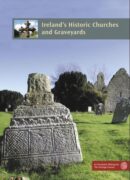
Information and guidance on the conservation and management of historic graveyards and churches.
Read moreRead lessHistoric graveyards are very different in their character from modern cemeteries that are often described as ‘Lawn Cemeteries’. The latter are usually laid out in neat rectangular burial plots that are accessed by a network of pathways. In these modern cemeteries the surface of the ground is level and has the appearance of a lawn because the cemetery has not been used as a burial place over many centuries. The opposite is true for historic graveyards some of which have been used as burial grounds for over a millennium.
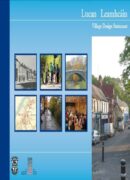
A Village Design Statement (VDS) is a community based document that describes the qualities and characteristics of a settlement. It sets out design guidance for future development and can influence planning applications and decisions.
Read moreRead lessThe VDS was produced through an extensive community consultation programme combined with desk-based study. This included an introductory meeting with community members, distribution of a key issues leaflet and questionnaires, and a series of workshops involving a wide cross section of the community including adults, children, and young people. Over 60 questionnaires were completed and over 75 people attended the main workshop.

The first action plan of the IWTN.
Read moreRead lessThe Action Plan 2006-2008 is set out in two main parts:
1: Eleven ‘Key Actions’ for late 2005/early 2006, (i.e. Immediate Actions); and
2: Twelve ‘Further Actions’ (i.e. Short Term and Medium Term) 2006-2008 are set out under the
following themes:
• Networking and Lobbying (3 no. actions);
• Conservation and Management (4 no. actions);
• Joint Promotion and IT (3 no. actions); and
• Education and Training (2 no. actions).

This Conservation Plan is the outcome of an integrated study of Russborough Houses carried out by a team of conservation architects, archaeologists, structural and services engineers, building material consultants and landscape architects, with specialist advice on the care of the art collections.
The conservation plan addresses the following:
• Understanding the place
• The cultural significance of the place
• Identifying issues which may affect that significance
• Writing policies to address the issues
• Building in mechanisms for implementation and review

This conservation plan is the outcome of a conservation-focused study of St. Mary’s Church and Graveyard in the centre of Kilkenny City. The study team was comprised of archaeologists, building history researchers, a structural engineer, conservation architects, building and stone material consultants, and a landscape architect.
Read moreRead lessThe plan includes a brief historical background study of St Mary’s Church and Graveyard, a detailed scaled survey of the site and a physical study of the site, its monuments and
buildings as they are currently. These studies have helped to lead to an understanding of the site and its components, their contribution to the integrity of the site, and the issues it faces.