Search

Search Results: og

Traditional Buildings on Irish Farms

Traditional Buildings on Irish Farms

Built/Urban Heritage & Archaeology

This publication outlines the significance of Ireland's Farm Heritage from the 'Big House' farm to small farmyards and how practices have changed over the years. It also provides insights

into how to protect Ireland's farm heritage for the future and offers guidelines for the repair and maintenance of traditional buildings and farmyards. 

Ireland’s landscape is enriched by its heritage of farm-houses and outbuildings, its field patterns and the nature of the boundaries that divide them. The landscape of Ireland is predominantly an agricultural one, and farmers have been its guardians. In times past, the occupants of
traditional farmhouses and their associated farmsteads were often also their builders. They made clever use of materials available locally and they built in accordance with a language of construction that was shared by their community.

  • Published by: The Heritage Council
The Care of Stained Glass

The Care of Stained Glass

Built/Urban Heritage & Archaeology

A practical guide to the conservation and preservation of stained glass.

Ireland has a rich legacy of stained glass. Fine examples of the art can be found in public and private buildings across the country, but mainly in our churches.The work of some of the finest European, English and Irish artists graces great cathedrals, historic buildings and humble churches. This booklet is intended as a guide for the custodians of these treasures, to
assist them in their care and conservation.

  • Published by: The Heritage Council
Saint Brendan's Cathedral, Clonfert: Conservation Plan

Saint Brendan's Cathedral, Clonfert: Conservation Plan

Built/Urban Heritage & Archaeology

The Conservation Plan process draws together all the elements of the built and natural heritage in a historic place, as well as providing a forum for all interested parties to come together and agree the way forward. Through this process, the congregation and local community have been empowered to participate fully in the decisions taken, and to engage with the experts and with the statutory and other authorities.

The policies contained in this Conservation Plan provide a detailed methodology for approaching the conservation of the doorway of the cathedral while recognising the importance of its setting within the cathedral and within the attendant grounds. The Plan also provides policies for conserving the other elements of the complex, recognising that the significance of the site as a whole is as important as the significance of its parts.

  • Published by: The Heritage Council
  • Author(s): Dermot Nolan and Pat Ruane
Saint Lachtain's Church, Freshford: Conservation Plan

Saint Lachtain's Church, Freshford: Conservation Plan

Built/Urban Heritage & Archaeology

The Conservation Plan methodology, introduced by the Heritage Council in1998, was applied to St Lachtain’s Church in 2001 and 2002. It provides a practical vision for the repairs and conservation of the monument and for the future of its setting.

The Church of St Lachtain in Freshford, County Kilkenny is a place of great antiquity. This Conservation Plan clearly and unequivocally states the significance of this monument and gives the church a prominence in the ecclesiastical history of Ireland which had hitherto been largely unrecognised.

  • Published by: The Heritage Council
  • Author(s): Margaret Quinlan and Timothy Foley
Financial Support for Architectural Conservation in Ireland

Financial Support for Architectural Conservation in Ireland

Built/Urban Heritage & Archaeology

Having observed the difficulties experienced by owners and funding bodies, the Heritage Council commissioned this research on the various methods of support and their effectiveness in providing access to funding and achieving high standards of architectural conservation.

Based on the findings of this research, a number of recommendations have emerged, which if implemented would, in the Council’s opinion, provide greater efficiency and quality as well as cost-effective support for our architectural heritage.

  • Published by: The Heritage Council
Community Led Village Design Statements Toolkit

Community Led Village Design Statements Toolkit

Built/Urban Heritage & Archaeology

The toolkit sets out a step-by-step guide to undertaking a community-led VDS, using a collaborative and participative process. It has been developed in accordance with the UNECE Aarhus Convention and the European Landscape Convention.

While this toolkit deals specifically with community-led VDS, it is hoped that the information and guidance provided on relevant structures, processes, outputs and potential outcomes will enable and empower local communities throughout the island of Ireland to become involved in shaping their local environments.

  • Published by: The Heritage Council
Community-Led Village Design Statements Toolkit: Workshop Document

Community-Led Village Design Statements Toolkit: Workshop Document

Built/Urban Heritage & Archaeology

The Community-Led Village Design Statement Toolkit was launched at the inaugural community-led VDS workshop, held in Kilkenny in October 2012. This document provides useful information on the background to the Toolkit for participants on the day.

The toolkit was prepared by the Heritage Council in partnership with Dublin City Council and Meath County Council; and in collaboration with the village communities of both Sandymount, Dublin and Julianstown, Co. Meath.

  • Published by: The Heritage Council
Recording & Conserving Ireland's Industrial Heritage

Recording & Conserving Ireland's Industrial Heritage

Built/Urban Heritage & Archaeology

The Heritage Council is conscious of this often-neglected part of our heritage, and in this publication seeks to raise awareness of what we have as well as giving simple guidance as to how to record and conserve it.

The remains of our industrial past can be seen throughout the country: bridges, canals, railways and stores still in use, all bear testimony to the work of past generations. However, there are other signs too - derelict buildings, rusting machinery, lone chimneys marking the sites of once-thriving industries. 

  • Published by: The Heritage Council
  • Author(s): Fred Hamond and Mary McMahon
Record of Protected Structures compiled from Local Authority Lists

Record of Protected Structures compiled from Local Authority Lists

Built/Urban Heritage & Archaeology

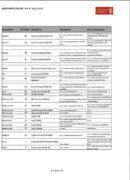
This index is compiled from the Record of Protected Structures (RPS) held by each planning authority, the list changes annually but the document provides a record for 2011.

In 2011 the Heritage Council estimated that there are 38,171 protected structures in Ireland.

  • Published by: The Heritage Council
Policies & Priorities: Building Regulations & the National Heritage

Policies & Priorities: Building Regulations & the National Heritage

Built/Urban Heritage & Archaeology

This research aims to examine the impact of building construction law, regulation and practice on historic buildings, to investigate the situation elsewhere, and to make recommendations, where judged appropriate, for policy initiatives which might be taken in the area.

Research work was undertaken in several directions: drafting and circulation of a questionnaire on Building Regulations and their impact on historic buildings to the construction design professions - architects, engineers, and surveyors; drafting of a
similar questionnaire and its circulation to Building Control, Fire and Planning Authorities throughout the State; interviews with
interested individuals; and analyses of legislation, regulation and practice here and in selected countries abroad, notably
the United Kingdom and the United States.

  • Published by: The Heritage Council