Heritage Council Annual Report 2004
Annual report of the Heritage Council, including financial statements for 2004.
Read moreRead lessAnnual report of the Heritage Council, including financial statements for 2004.
- Published by: The Heritage Council
Annual report of the Heritage Council, including financial statements for 2004.
Read moreRead lessAnnual report of the Heritage Council, including financial statements for 2004.
The Conservation Plan methodology, introduced by the Heritage Council in1998, was applied to St Lachtain’s Church in 2001 and 2002. It provides a practical vision for the repairs and conservation of the monument and for the future of its setting.
Read moreRead lessThe Church of St Lachtain in Freshford, County Kilkenny is a place of great antiquity. This Conservation Plan clearly and unequivocally states the significance of this monument and gives the church a prominence in the ecclesiastical history of Ireland which had hitherto been largely unrecognised.
A study of the area surrounding Lanesborough to Shannonbridge
Click Read More to view/download the appendices and maps
Appendices-Waterway Corridor of the Shannon from Lanesborough to Shannonbridge Zipped file 5.9MB
Maps-Waterway Corridor of the Shannon from Lanesborough to Shannonbridge Zipped file 7.38MB
A study of the area surrounding The Shannon River between Roosky and Lanesborough and The Royal Canal between Cloondara and Thomastown
Click read more to view/download appendices and maps
Appendices for Waterway Corridor Study Shannon: Rooskey to Lanesborough and the Royal Canal Zipped Folder 3.4MB
Maps for Waterway Corridor Study Shannon: Rooskey to Lanesborough and the Royal Canal Zipped Folder
This publication provides the findings of the seminar and the individual presentations made.
Read moreRead lessIn 2003 the Heritage Council became concerned about Irish boats, both inland and sea-going, as a neglected aspect of our heritage. To inform itself, the Council commissioned Reggie Goodbody to carry out a scoping study of the heritage boat sector. Arising from this study the Council
decided to host a seminar on Ireland’s boats in 2004, to which people involved in any aspect of inland and maritime boats were invited to attend.
Quarterly magazine of the Heritage Council, with news, events, opportunities and features.
Read moreRead lessIn this issue:
MANAGING OUR OCEANS
How do we prevent over-exploitation?
THE CONVENTION ON BIOLOGICAL DIVERSITY
thinking globally, acting locally
ARCHAEOLOGY IN CONTEMPORARY IRELAND
Challenges and opportunities
COUNTRYSIDE ACCESS • OUR HISTORIC HOMES • PILGRIM PATHS • HERITAGE EVENTS
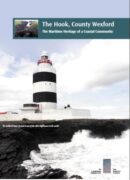
The leaflet provides information on the landscape, history and lifestyle of the people who have lived on Hook Head peninsula, County Wexford.
Read moreRead lessThe long, narrow point of Hook (an old English word meaning a promontory almost surrounded by the sea), located in south-west county Wexford, forms the eastern shore of Waterford Harbour. Because of its peninsular nature, the sea dominated everyday life. Fishing, both sea and shore-based, was an essential activity for food and profit, as was harvesting of seaweed and shellfish from the shoreline.
A guide for Local Authorities and others on the conservation of bats.
Read moreRead lessThis guide provides information on the nine species of bats found in Ireland, where they can be found and measures that can be taken during construction works to protect them.
A practical guide to the conservation and preservation of stained glass.
Read moreRead lessIreland has a rich legacy of stained glass. Fine examples of the art can be found in public and private buildings across the country, but mainly in our churches.The work of some of the finest European, English and Irish artists graces great cathedrals, historic buildings and humble churches. This booklet is intended as a guide for the custodians of these treasures, to
assist them in their care and conservation.
The Heritage Council asked the Bat Conservation Trust to develop and evaluate a novel bat detector-based monitoring project for Ireland.
Read moreRead lessFifteen volunteers surveyed eight survey routes, five of which were repeated. Volunteers contributed 85 hours on the survey. The mean number of encounter rates (per km) for each species/species group were: common pipistrelle (Pipistrellus pipistrellus) = 1.94, soprano pipistrelle (P. pygmaeus) = 0.75, Leisler’s bat (Nyctalus leisleri) = 0.46 and Myotis sp = 0.06.