Ireland's Coastline Seaweed

Ireland's Coastline Seaweed

Natural Heritage & Biodiversity Underwater & Maritime Heritage

Seaweed is gathered as food, processed and used as fertiliser, forms an ingredient in many cosmetics and spa treatments, and is the subject of biotechnological and pharmaceutical research. This poster/publication explores the contemporary and historical uses of seaweed, the role of seaweed in biodiversity and provides references for further information.

Seaweed is one of Ireland’s least-used resources. As an island with a 7,000 kilometre coastline, located in the warm and fertile waters of the Gulf Stream, we have an abundance of many
different kinds of seaweed. Although we currently use only a small fraction of Irish seaweed, this situation is changing. 

Attention is turning to the sea as a source of food, energy, and raw material for the chemical and pharmaceutical industries. Ireland’s interesting history of harvesting seaweed is about to
begin a new chapter.

  • Published by: The Heritage Council
Shannon Waterway Corridor Study Seminar - Presentation Summaries

Shannon Waterway Corridor Study Seminar - Presentation Summaries

Summaries of presentations made at the 2008 seminar on the Shannon Waterway Corridor Study.

In November 2008, the Heritage Council hosted a seminar to progress the work of its Shannon Waterway Corridor Study and to explore ways for all agencies involved in management of the

River Shannon to work together. You can download copies of the presentations delivered at the seminar below. Summaries of the presentations are provided in this document.

  • Published by: The Heritage Council
Passed to the Future: The Bishop's Palace

Passed to the Future: The Bishop's Palace

Corporate Publications Built/Urban Heritage & Archaeology

The history of The Bishop's Palace, Kilkenny, the home of the Heritage Council since 2008.

Using the conservation plan methodology introduced into Ireland by the Heritage Council,
the historical significance of all aspects of the building and site were documented. Based on a
careful survey of its qualities, Consarc Architects drew up plans for the building’s re-use. 

The
Heritage Council, conscious of the rich tapestry of history that could be read in the buildings,
was anxious to demonstrate that 'heritage' is a living thing, and that having a respectful attitude
to heritage does not curtail creativity, or contemporary interventions.

  • Published by: The Heritage Council
Heritage Outlook: Summer/ Autumn 2008

Heritage Outlook: Summer/ Autumn 2008

General

The Heritage Council's quarterly magazine with heritage news, events, opportunities and features.

In this edition - Áras na hOidhreachta: the archaeology of a palatial past - the history of the Bishop's Palace in Kilkenny, home to the Heritage Council and an important piece of our national heritage.

Also in this Issue:

- Celebrating Biodiveristy Week 2008 - How do we really feel about biodiversity loss? The Lichen Ireland project 2005 - 2008 and creating green infrastructure. Pollution in China, the wise use of wetlands, thatching and Castlecomer Discovery Park, Kilkenny.

  • Published by: The Heritage Council
Bat Survey Guidelines: Traditional Farm Buildings Scheme

Bat Survey Guidelines: Traditional Farm Buildings Scheme

Built/Urban Heritage & Archaeology Natural Heritage & Biodiversity

Guidelines for the surveying of bats within heritage structures.

These guidelines have been developed for Ecological Consultants to standardise both the methodology for survey of structures within the Heritage Council’s Traditional Farm Buildings Scheme and the reporting of same. In developing these guidelines, we have drawn on a wide range of expertise and believe that the advice given is the best that is currently available. Bat surveys submitted to the building owner and the Heritage Council must adhere to these guidelines in order to satisfy grant requirements under the Traditional Farm Buildings Scheme.

  • Published by: The Heritage Council
  • Author(s): Tina Aughney, Conor Kelleher & Donna Mullen
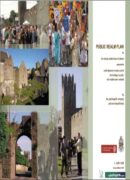
Fethard Public Realm Plan

Fethard Public Realm Plan

Built/Urban Heritage & Archaeology

A Publi Realm Plan for the historic town of Fethard in Co. Tipperary.

This Public Realm Plan for the Walled Town of Fethard seeks to provide a strategic framework by which the town can maximise the benefits of its many assets, without losing those special qualities that give it character and charm. 

  • Published by: The Heritage Council
  • Author(s): The Paul Hogarth Company and ERM Ireland limited
Enhancing Local Distinctiveness: Evaluation of Village Design Statements (VDSs) in Ireland 2000-2008

Enhancing Local Distinctiveness: Evaluation of Village Design Statements (VDSs) in Ireland 2000-2008

Built/Urban Heritage & Archaeology

The remit for this study was to inform national policy on issues relating to the conservation, enhancement and sustainable development of villages in Ireland.

The remit for this study was to inform national policy on issues relating to the conservation, enhancement and sustainable development of villages in Ireland. The stated aim was: “to examine the ways in which Village Design Statements have progressed and developed in Ireland, with particular emphasis on the involvement of the Heritage Council, Local Authorities / Local Authority Heritage Officers in VDS and the adoption of VDS as Supplementary Planning Guidance”.

  • Published by: The Heritage Council
  • Author(s): Stephen Owen, Jeff Bishop, Malcolm Moseley, Ros Boase, Fintan Coffey
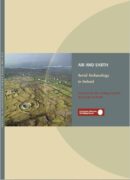
Air and Earth: Aerial Archaeology in Ireland

Air and Earth: Aerial Archaeology in Ireland

Built/Urban Heritage & Archaeology

The Heritage Council commissioned Mr George Lambrick to examine aerial archaeology in Ireland.

One of the initiatives identified by the Heritage Council’s Strategic Plan 2007-2013 is that archaeological research issues and practice in the widest sense should be more overtly and consistently identified and from time to time reviewed. These research issues should also engage more with what both specialists and local communities find interesting about the past. To contribute to this the Heritage Council commissioned Mr George Lambrick to examine aerial archaeology in Ireland. Aerial Archaeology is the practice of using aircraft (or in some cases satellites) to provide a high-level view of the landscape based on conventional photography and a range of remote sensing technologies. That review is presented here.

  • Published by: The Heritage Council
  • Author(s): George Lambrick
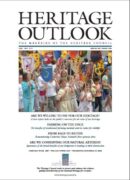
Heritage Outlook: Winter 2007/ Spring 2008

Heritage Outlook: Winter 2007/ Spring 2008

General

The quarterly magazine of the Heritage Council with heritage news, events, opportunities and features.

In this issue:

ARE WE WILLING TO PAY FOR OUR HERITAGE?
A new report looks at the public’s concerns for the state of our heritage
FARMING ON THE EDGE
The benefits of traditional farming methods and its value for wildlife
FROM RAGS TO RICHES
Remembering Catherine Hayes, Ireland’s first operatic diva
ARE WE CONSERVING OUR NATURAL ARTERIES?
Ignorance of the broad benefits of our hedgerows is leading to their destruction
HERITAGE WEEK 2007
WALLED TOWNS DAY
PRESERVING BUILDINGS AT RISK

  • Published by: The Heritage Council
Valuing Heritage in Ireland: Awareness Research

Valuing Heritage in Ireland: Awareness Research

Market Research & Economic Evaluation

This study follows surveys carried out by Lansdowne Market Research in 1999, 2004 and 2005 for the Heritage Council on levels of awareness and public attitudes to our national heritage.

The specific objectives of the study can be summarised as follows:
• To explore, through survey and analysis, the overall attitudes, opinions and
experiences of the Irish public regarding heritage and heritage protection;
• To determine the aspects of heritage upon which the public places most value, particularly in the context of current general public spending;
• To establish the extent to which the public is willing to pay (in the form of a proposed notional taxation) for extra heritage protection or provision.
• To establish the contributing factors towards the valuation of heritage, in terms of socio-economic background, attitudes, information and personal values

  • Published by: The Heritage Council