Search

Search Results: Ub

Farming and Archaeology

Farming and Archaeology

Built/Urban Heritage & Archaeology

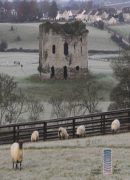
This publication provides a guide for farmers on how to recognise and protect important archaeology that may be on their land. 

Archaeological monuments such as moated sites and ringforts are the former homesteads of previous farming communities. Farming has been a vital force in developing our heritage and modern non-intrusive farming practices continue to preserve and shape our historic landscapes. This valuable legacy is something we should try to understand, cherish and protect for ourselves and for future generations.

  • Published by: The Heritage Council
Irish Walled Towns Network: Feedback

Irish Walled Towns Network: Feedback

Built/Urban Heritage & Archaeology

Irish Walled Towns’ Day and Local Photographic Competitions  in 20 Towns/ Cities, feedback and comparison with events in 2005.

Summary of feedback:

• 18 Walled Towns/Cities organised events on Irish Walled Towns’ Day 2006. Events included family fun-days, concerts, guided walks, etc.;
• Heritage Officers, Heritage Groups, local communities and businesses, Government Ministers, Local Authority Councillors and Officers
were all involved in the organisation and launching of the all-island events;
• The Network’s events were given excellent media coverage from national and local press, local radio, etc; (see Appendix E);
• The Heritage Council distributed over 300 Council T-shirts and baseball hats throughout Ireland on Irish Walled Towns’ Day;
• Two Walled Towns Conferences were organised in Kilmallock and Dublin;
• Photographic competitions were launched in 10 Walled Towns (north and south);
• The event has grown significantly since the first ever all-island event of 2005;
• Approximately 4,000 people took part in the IWTN’s celebratory Irish Walled Towns’ Day in 2006;
• Irish Walled Towns’ Day is particularly important to historic walled towns located outside the Greater Dublin Area (GDA);
• The local photographic competition period for entries will close on the 29thSeptember 2006 and the national winners will be announced at the inaugural Irish Walled Towns Network Gala Dinner on the 9thNovember 2006 in the D Hotel, Drogheda

  • Published by: The Heritage Council
Jellyfish in our Coastal Seas

Jellyfish in our Coastal Seas

Natural Heritage & Biodiversity Underwater & Maritime Heritage

This publication examines the different types of jellyfish which can be found in Irish waters. The life-cycle of the jellyfish, their habitats, jellyfish as food for other marine animals, and their impacts on humans is also outlined.

Ireland has five indigenous jellyfish species: Barrel, Blue, Common (Moon), Compass, and Lion’s Mane. A sixth species (Pelagia noctiluca) also occurs, but as it is an oceanic species it only occasionally makes an appearance in our coastal waters. Contrary to what you may think, jellyfish are not carried at the whim of ocean currents and tides on to our beaches. Many jellyfish maintain their positions by swimming down when the tide is going out, and swimming up when the tide is coming in. In this way they can stay in their preferred habitats.

  • Published by: The Heritage Council
Ireland's Coastline Seaweed

Ireland's Coastline Seaweed

Natural Heritage & Biodiversity Underwater & Maritime Heritage

Seaweed is gathered as food, processed and used as fertiliser, forms an ingredient in many cosmetics and spa treatments, and is the subject of biotechnological and pharmaceutical research. This poster/publication explores the contemporary and historical uses of seaweed, the role of seaweed in biodiversity and provides references for further information.

Seaweed is one of Ireland’s least-used resources. As an island with a 7,000 kilometre coastline, located in the warm and fertile waters of the Gulf Stream, we have an abundance of many
different kinds of seaweed. Although we currently use only a small fraction of Irish seaweed, this situation is changing. 

Attention is turning to the sea as a source of food, energy, and raw material for the chemical and pharmaceutical industries. Ireland’s interesting history of harvesting seaweed is about to
begin a new chapter.

  • Published by: The Heritage Council
Traditional Buildings on Irish Farms

Traditional Buildings on Irish Farms

Built/Urban Heritage & Archaeology

This publication outlines the significance of Ireland's Farm Heritage from the 'Big House' farm to small farmyards and how practices have changed over the years. It also provides insights

into how to protect Ireland's farm heritage for the future and offers guidelines for the repair and maintenance of traditional buildings and farmyards. 

Ireland’s landscape is enriched by its heritage of farm-houses and outbuildings, its field patterns and the nature of the boundaries that divide them. The landscape of Ireland is predominantly an agricultural one, and farmers have been its guardians. In times past, the occupants of
traditional farmhouses and their associated farmsteads were often also their builders. They made clever use of materials available locally and they built in accordance with a language of construction that was shared by their community.

  • Published by: The Heritage Council
The Care of Stained Glass

The Care of Stained Glass

Built/Urban Heritage & Archaeology

A practical guide to the conservation and preservation of stained glass.

Ireland has a rich legacy of stained glass. Fine examples of the art can be found in public and private buildings across the country, but mainly in our churches.The work of some of the finest European, English and Irish artists graces great cathedrals, historic buildings and humble churches. This booklet is intended as a guide for the custodians of these treasures, to
assist them in their care and conservation.

  • Published by: The Heritage Council
Seeking Your Views on Water Quality: Feedback Report

Seeking Your Views on Water Quality: Feedback Report

Natural Heritage & Biodiversity

This document is a record of the feedback to the consultation document and the seminar of 18th October 2003 and represents the views of the respondents expressed in writing or during the workshop and plenary sessions.

The Heritage Council identified the implementation of the EU Water Framework Directive as a major work area with particular emphasis on the public participation aspects. To assist in developing policy, Council agreed to canvas opinion on current water quality and current and future water management proposals.

  • Published by: The Heritage Council

Heritage Act 1995

General

The piece of Irish legislation, under which the Heritage Council was established.

The Heritage Council was established as a
statutory body under the Heritage Act, 1995. The Heritage Act provides a
definition of ‘heritage’ which is truly comprehensive and includes:
monuments; archaeological objects; heritage objects such as art and
industrial works; documents and genealogical records; architectural
heritage; flora and fauna; wildlife habitats; landscapes and seascapes;
wrecks; geology; heritage gardens; parks and inland waterways.


The introduction to the Act reads as follows:

"An act to promote public interest in and knowledge, appreciation and protection of the national heritage, to establish a body to be known as an Chomhairle Oidhreachta, to define its functions, to provide for the exercise by the Minister for Arts, Culture and The Gaeltacht of functions in relation to the national heritage and to provide for other matters connected with the matters aforesaid." [10th April, 1995]