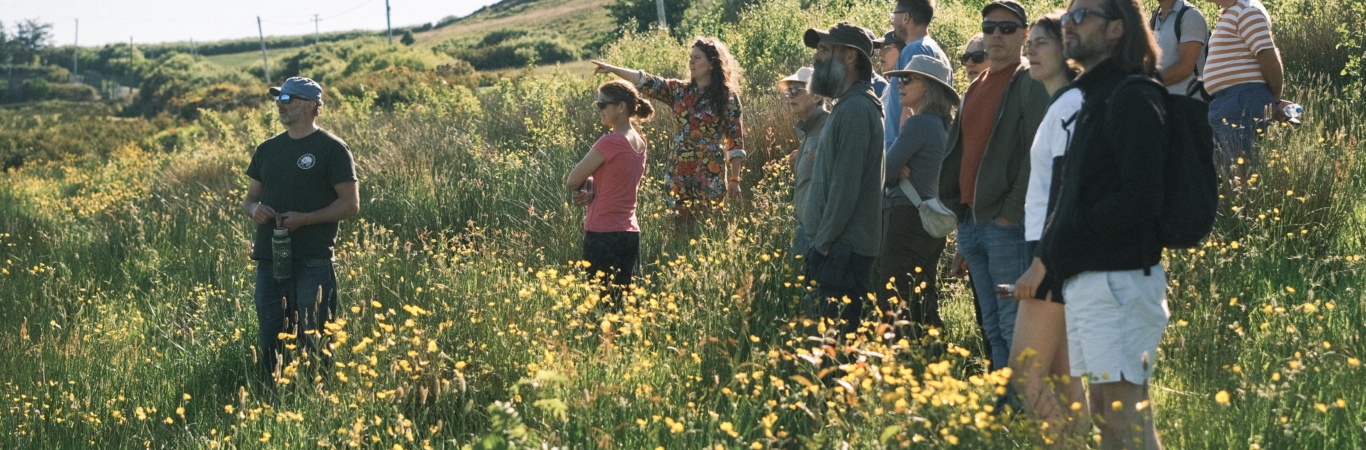
Community, Landscape and Heritage: New Research Published
The Heritage Council has published new independent research examining how communities can play a sustained role in the management of heritage-rich landscapes across Ireland.
The Heritage Council has published new independent research examining how communities can play a sustained role in the management of heritage-rich landscapes across Ireland.
The main findings in the report, which can be read on the Heritage Council’s website under the Publications section, suggested that community involvement is most effective where:
· governance structures are clear and formal
· funding is long-term rather than project-by-project
· communities are consulted before key decisions are made
· there is successful integration of traditional land management knowledge with professional expertise
Commissioned by the Heritage Council and carried out by an interdisciplinary team at 12 Foot Insight, the research draws on literature review, policy analysis, stakeholder interviews, a national survey, and ten Irish and international case studies.
The research treats landscape as an integrated space, encompassing natural, built, cultural and intangible heritage, rather than separating these into distinct management silos. This framing reflects how communities actually experience and relate to the places they live in, and it points toward more coherent approaches to conservation, land use and governance.
The research is published at a moment when European and national policy frameworks, including the Nature Restoration Law and the Planning and Development Act 2024, are placing greater emphasis on participatory approaches to landscape management.
Catherine Casey, Head of Climate Change with the Heritage Council said:
“Ireland's landscapes the product of millennia of human activity, shaped by farming, fishing, habitation, memory and meaning. They also face mounting pressures, from agricultural intensification and biodiversity loss to climate change and the expanding development. The question of who manages these landscapes, how, and with what degree of community involvement is increasingly important, and increasingly contested. Therefore, the commissioning of this piece of important research is timely and offers insights into how we can empower communities and decision-makers to take important actions.”
The report is independent research. Its findings and recommendations are those of the authors and do not represent the policy positions of the Heritage Council. It is published as a contribution to the wider evidence base on landscape, heritage and community, and the Heritage Council will draw on its findings in relevant advisory and policy contexts.